Cosmic Cannibalism: Uncovering the Milky Way's Ancient Feast
The night sky has long been a source of awe and mystery, with the Milky Way's twinkling stars a reminder of the universe's vast and untold secrets. However, a...
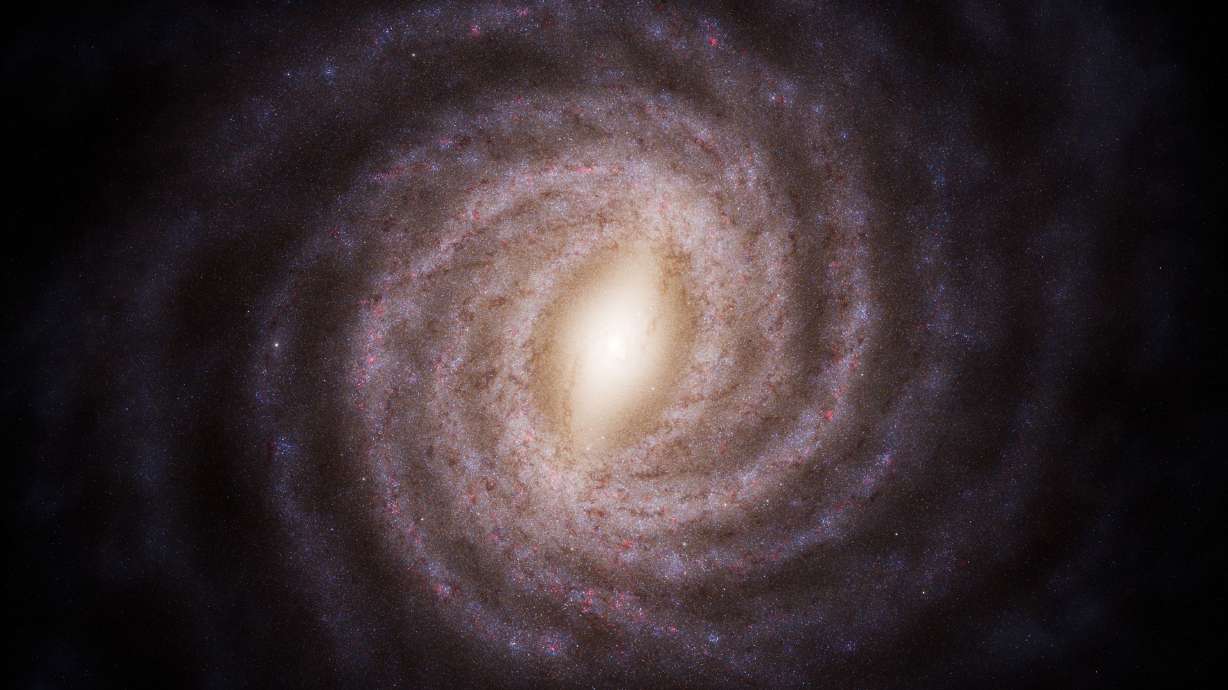
The night sky has long been a source of awe and mystery, with the Milky Way's twinkling stars a reminder of the universe's vast and untold secrets. However, a recent discovery has revealed a darker side to the galaxy's history, one that could rewrite the textbooks on cosmic evolution: the Milky Way may have devoured a dwarf galaxy, leaving behind a trail of stellar debris that scientists are only now beginning to unravel.
A Dwarf Galaxy's Demise
Researchers at the Harvard-Smithsonian Center for Astrophysics have identified a peculiar collection of stars that they believe represent the remnants of Loki, a dwarf galaxy that met its demise approximately 10 billion years ago. The finding, published in the journal Nature, challenges our current understanding of galaxy interactions and raises intriguing questions about the Milky Way's history.
“This is a game-changer,” said Dr. Maria Rodriguez, lead author of the study. “For the first time, we're seeing evidence of a galaxy being consumed by another, and it's not just a matter of galaxies colliding and merging – it's a full-blown ingestion, with the larger galaxy swallowing the smaller one whole.”
The Trail of Destruction
The discovery of Loki's remnants has left scientists scrambling to piece together the events that led to its demise. According to simulations, the dwarf galaxy was likely torn apart by the Milky Way's strong gravitational forces, with its stars and gas being stripped away and absorbed into the larger galaxy. The process, known as tidal disruption, would have been a slow and brutal one, with the smaller galaxy being stretched and distorted over millions of years.
What's Next for the Milky Way
As researchers continue to study the remnants of Loki, they're gaining a deeper understanding of the Milky Way's history and the complex processes that shape galaxy evolution. The discovery also raises questions about the role of galaxy interactions in shaping the universe as we know it today. With the Milky Way continuing to gobble up smaller galaxies, what does the future hold for our cosmic neighborhood?
The search for answers will continue, but one thing is clear: the Milky Way's feast is far from over. As we peer into the depths of space, we're reminded that the universe is full of secrets, and the night sky holds many more mysteries waiting to be uncovered.