Jupiter's Fury: Unveiling the Secrets of the Gas Giant
In the depths of space, a tiny probe embarked on a perilous journey to uncover the mysteries of the universe's largest planet. Launched by NASA's ambitious...
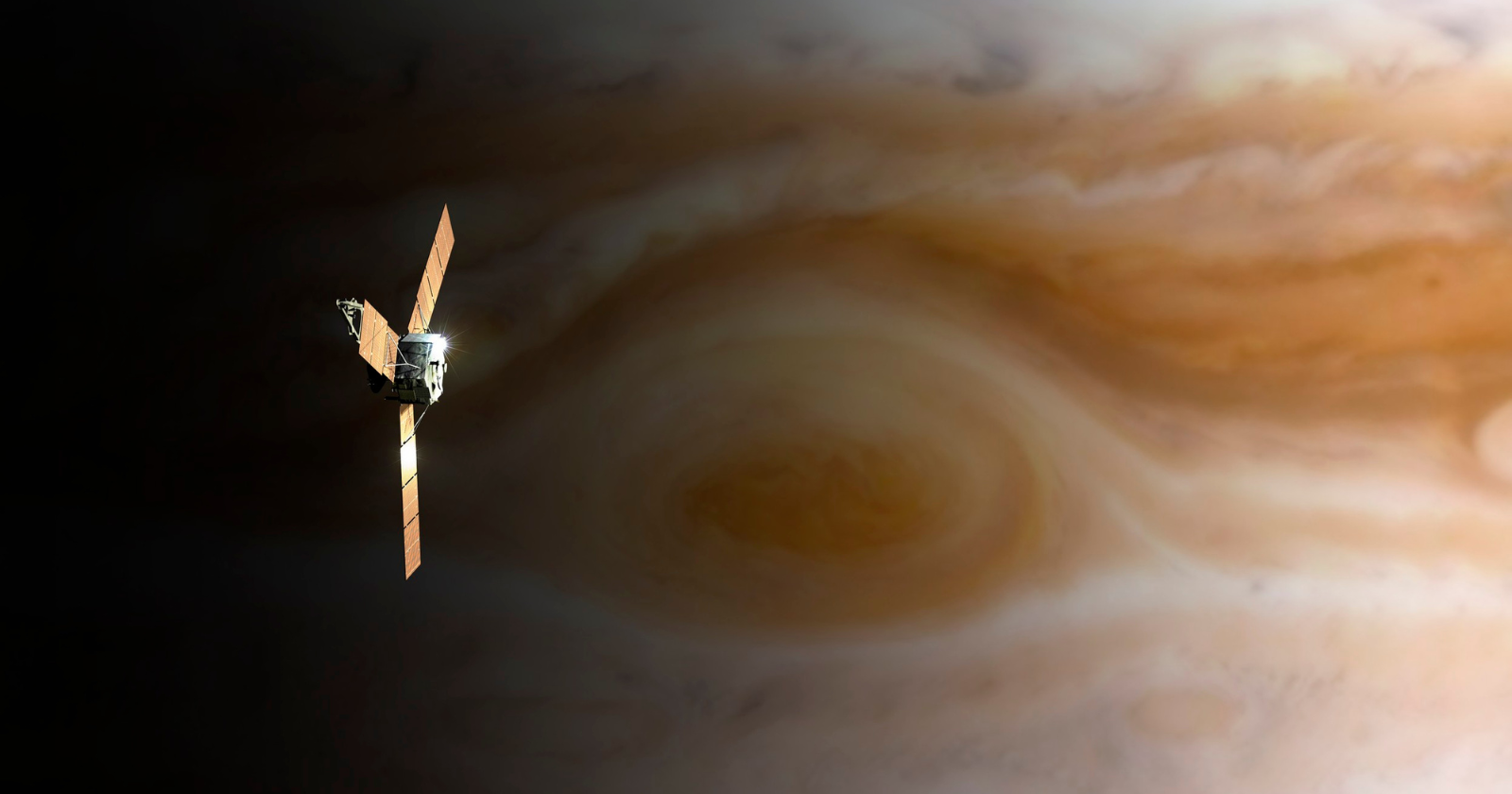
In the depths of space, a tiny probe embarked on a perilous journey to uncover the mysteries of the universe's largest planet. Launched by NASA's ambitious Galileo spacecraft in 1995, the probe plummeted into Jupiter's swirling atmosphere, a feat that would change the course of scientific history forever.
A Brave New Frontier
The Galileo spacecraft had been orbiting Jupiter since December 1995, providing a wealth of information about the planet's magnetic field, moons, and aurorae. But the NASA team had bigger plans. They wanted to take a closer look at Jupiter's atmosphere, a region shrouded in mystery and hostile to human exploration. The solution lay in a tiny probe, no larger than a shoebox, designed to withstand the extreme conditions of the planet's atmosphere.
'The probe was like a tiny, self-sacrificing hero, willing to give its life to reveal the secrets of the universe.'
As the probe entered Jupiter's atmosphere, it began to transmit data to the Galileo spacecraft, which relayed it back to Earth. The information was nothing short of groundbreaking – temperature readings, atmospheric pressure, and even hints of exotic chemicals that defied explanation. But the probe's mission was far from over.
The Final Transmission
The heat and pressure inside Jupiter's atmosphere were unforgiving, and the probe's instruments began to fail one by one. Despite this, it continued to transmit data until the very end, sending back a flood of information in its final 58 minutes of life. It was a remarkable achievement, one that would rewrite the textbooks on Jupiter's atmosphere and cement the probe's place in history.
A New Era of Space Exploration
The Galileo probe's mission may have ended in a blaze of glory, but its legacy continues to inspire new generations of scientists and engineers. Today, NASA is planning a new mission to Jupiter's moon Europa, which is believed to harbor a liquid water ocean beneath its icy surface. The implications are profound – could we one day find evidence of extraterrestrial life in our solar system? The search for answers is ongoing, and the Jupiter probe's bravery in the face of the unknown has paved the way for a new era of space exploration.