The AI Revolution in Science: Unveiling a New Era of Discovery
The scientific community has witnessed a profound shift in recent years, as artificial intelligence (AI) has transformed the way researchers approach complex...
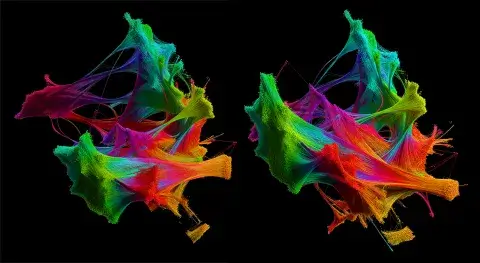
The scientific community has witnessed a profound shift in recent years, as artificial intelligence (AI) has transformed the way researchers approach complex problems. Once seen as a tool for augmenting human capabilities, AI has evolved into a powerful driver of scientific progress. The pace of breakthroughs has accelerated, and the boundaries between disciplines have blurred, giving rise to a new era of discovery.
The AI Advantage
One of the most significant advantages of AI in science is its ability to analyze vast amounts of data, identify patterns, and make predictions. In the field of materials science, for example, AI has been used to predict the properties of new materials, such as their strength, conductivity, and optical properties. This has led to the development of new materials with unprecedented properties, which have the potential to revolutionize industries such as energy, transportation, and healthcare.
"The key to unlocking the full potential of AI in science is to recognize that it's not a replacement for human intuition, but rather a complement to it."
This quote from Dr. Rachel Kim, a leading expert in AI for science, highlights the importance of collaboration between humans and machines. By combining the strengths of both, researchers can tackle complex problems that were previously unsolvable. AI can process vast amounts of data, identify patterns, and make predictions, while humans can provide context, intuition, and creativity.
The Future of Discovery
The applications of AI in science are vast and varied. In biology, AI has been used to analyze genomic data, identify new targets for disease treatment, and predict the behavior of complex biological systems. In physics, AI has been used to simulate the behavior of subatomic particles, predict the properties of exotic matter, and analyze large-scale astronomical data. The possibilities are endless, and the potential impact on society is profound.
What's Next?
As AI continues to evolve and improve, we can expect to see even more breakthroughs in the coming years. The development of new AI algorithms, such as those based on quantum computing and deep learning, will enable researchers to tackle even more complex problems. The integration of AI with other emerging technologies, such as blockchain and the Internet of Things (IoT), will create new opportunities for scientific discovery and innovation. The future of science is bright, and AI is leading the charge.
In conclusion, the AI revolution in science has marked a new era of discovery, where humans and machines collaborate to tackle complex problems. As we look to the future, we can expect to see even more breakthroughs, driven by the power of AI. The possibilities are endless, and the potential impact on society is profound. One thing is certain – the future of science has never been brighter."