The Ancient Shellfish Foragers: Uncovering the Hidden Roots of Humanity
In a groundbreaking discovery that sheds new light on the lives of our ancient ancestors, a team of researchers has unearthed evidence that Neanderthal groups...
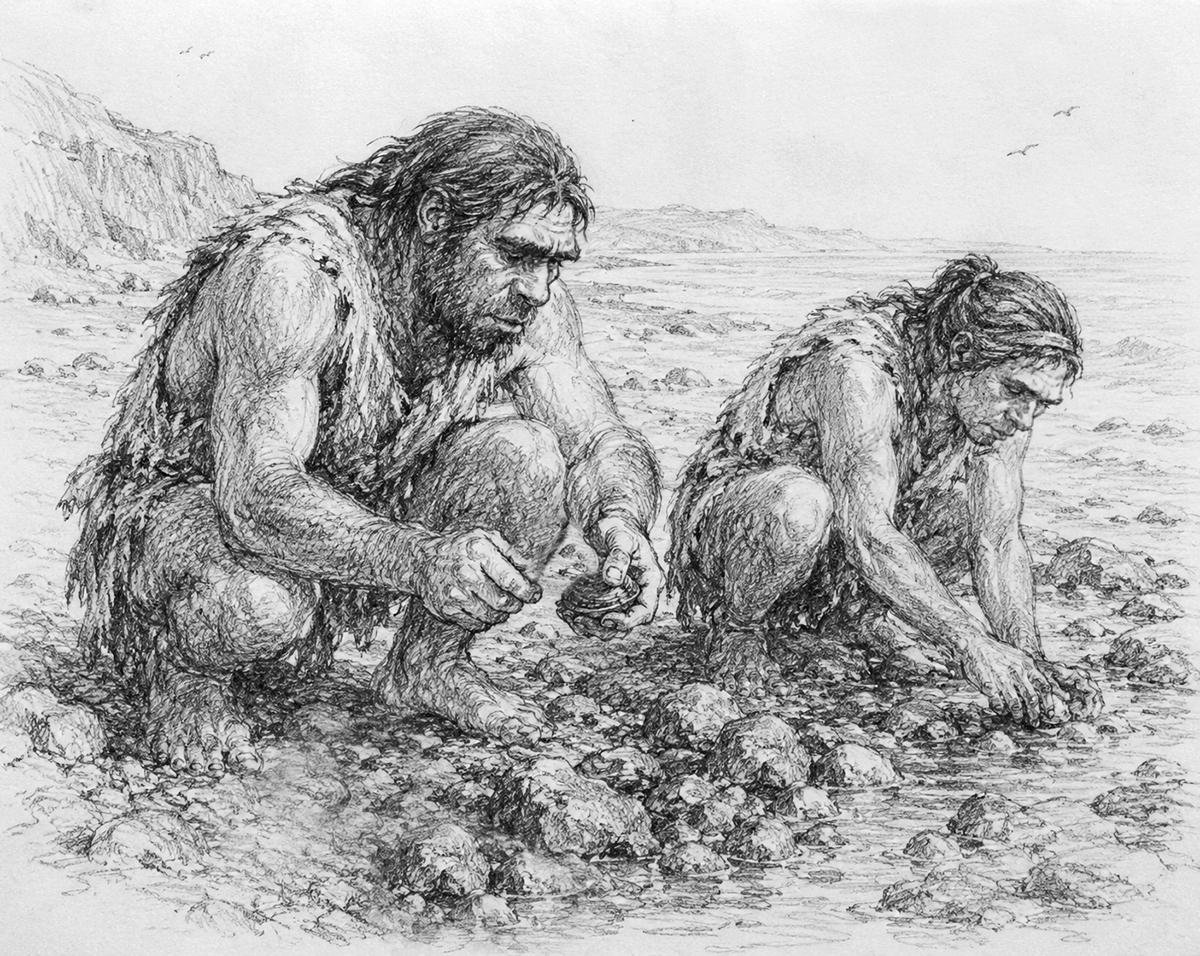
In a groundbreaking discovery that sheds new light on the lives of our ancient ancestors, a team of researchers has unearthed evidence that Neanderthal groups living along the southern coast of Europe were gathering shellfish with the same zeal and precision as modern humans, dating back a staggering 115,000 years.
The Iberian Coast: A Fertile Ground for Human Evolution
The study, led by a team of archaeologists and paleoanthropologists from Spain, focused on the remains of shellfish gathered from the Los Aviones Cave, a site located on the southeastern coast of the Iberian Peninsula. The cave, which has yielded a treasure trove of fossilized remains, offered the perfect opportunity for researchers to delve into the lives of our ancient cousins and uncover the secrets of their survival strategies.
Through a meticulous analysis of the shellfish remains, the researchers were able to reconstruct a timeline of Neanderthal activity at the site, revealing a remarkable consistency in their foraging patterns. The team found that the Neanderthals were gathering shellfish throughout the year, from the warmth of summer to the chill of winter, demonstrating a level of adaptability and resourcefulness that is often associated with modern human populations.
“This study challenges the conventional view of Neanderthals as primitive and unsophisticated hunter-gatherers,” said Dr. Maria Rodriguez, lead author of the study. “Our findings suggest that they were highly adaptable and resourceful, able to thrive in a variety of environments and exploit a diverse range of food sources.”
Implications for Human Evolution
The discovery of Neanderthal shellfish gathering has significant implications for our understanding of human evolution. As Dr. Rodriguez noted, the study challenges the conventional view of Neanderthals as primitive and unsophisticated hunter-gatherers. Instead, the evidence suggests that they were highly adaptable and resourceful, able to thrive in a variety of environments and exploit a diverse range of food sources.
The study also highlights the importance of coastal environments in the evolution of human populations. The Neanderthals' ability to gather shellfish from the coast suggests that this environment played a crucial role in their survival and adaptation, and may have even contributed to the development of more complex social structures.
What's Next for Human Evolution Research
The discovery of Neanderthal shellfish gathering is a testament to the ingenuity and resilience of our ancient ancestors. As researchers continue to unravel the secrets of human evolution, it is clear that there is still much to be learned from the lives of our ancient cousins. By studying their strategies for survival and adaptation, we may uncover new insights into the human condition and our place in the world.
As we look to the future, it is clear that the study of human evolution will continue to be a rich and fertile ground for discovery. With new technologies and techniques emerging all the time, we may soon uncover even more secrets about our ancient ancestors and the lives they lived. The discovery of Neanderthal shellfish gathering is just the beginning – a reminder that the story of human evolution is still being written, and that there is still much to be discovered.