The Comfortable Retirement Conundrum: A State-by-State Guide to Living the Dream
Imagine waking up every morning in a beautiful beachside town, surrounded by warm sunshine and endless ocean views, without worrying about a single financial...
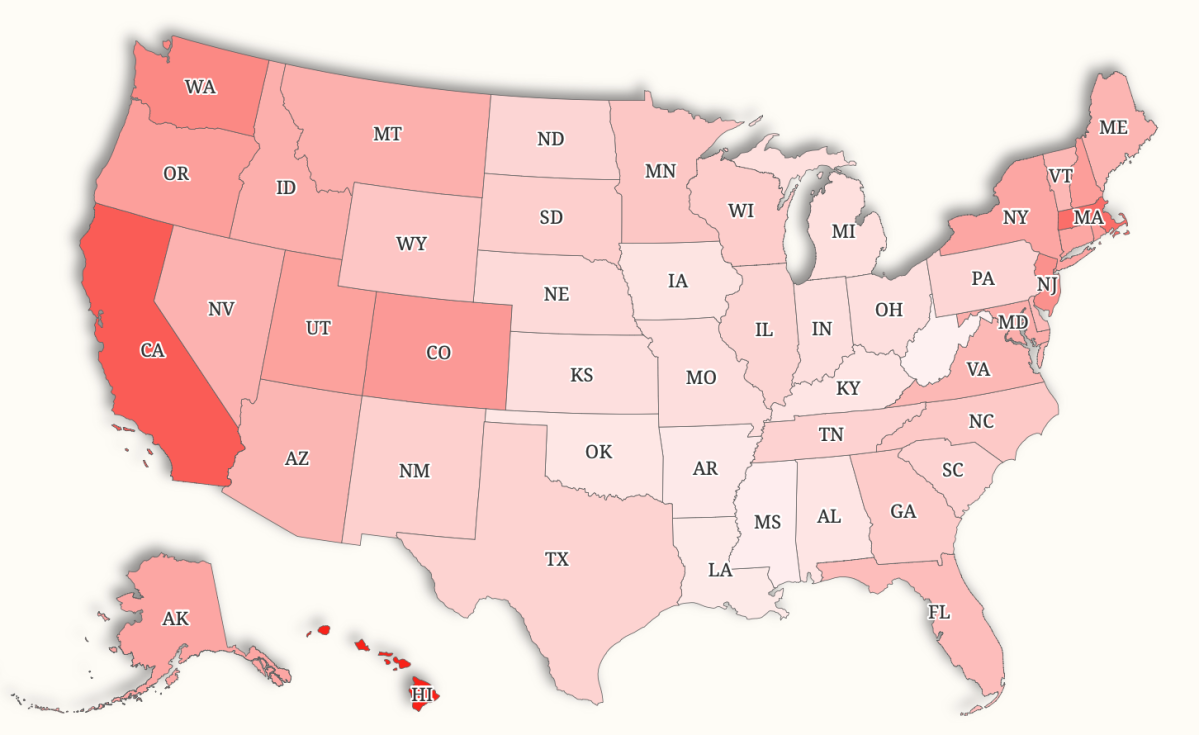
Imagine waking up every morning in a beautiful beachside town, surrounded by warm sunshine and endless ocean views, without worrying about a single financial stress. Sounds like a retirement paradise, right? But, according to a recent analysis, that idyllic scenario may be out of reach for many Americans, as the cost of living comfortably in retirement varies drastically from state to state.
The Highs and Lows of Retirement Costs
A comprehensive study of retirement expenses across the US reveals a striking disparity in annual costs, with some states pushing the $100,000 mark. To put this into perspective, a retiree in Hawaii, for instance, faces an estimated $123,000-per-year expense, while their counterparts in Mississippi can live comfortably on a mere $45,000. The reasons behind these discrepancies are multifaceted, but they largely boil down to factors such as housing, healthcare, and taxes.
Take housing, for example. In cities like Honolulu or San Francisco, the median home price is staggering – an average of $800,000 and $1.3 million, respectively. Compare this to states like Arkansas or West Virginia, where the median home price is under $200,000. These vastly different price points significantly impact the overall cost of living, with retirees in pricier areas requiring substantial savings to maintain their standard of living.
"When it comes to retirement planning, one size doesn't fit all," says financial advisor Emily Chen. "We need to consider the unique circumstances of each state, including local costs, tax laws, and access to quality healthcare."
A Closer Look at the Numbers
While some states, like Alaska and Wyoming, boast relatively low retirement costs due to their sparse populations and lower housing prices, others, such as New York and New Jersey, are bucking the trend with sky-high expenses. The reasons behind these variations are complex, but they often involve a mix of factors, including the state's tax climate, access to quality healthcare, and the availability of affordable housing.
Taking a closer look at the data, we find that states with high costs tend to cluster in the Northeast and West Coast, while those with lower costs are often found in the South and Midwest. This geographic divide is not coincidental, as states with higher costs often have higher demand for housing, which drives up prices. Conversely, states with lower costs tend to have lower demand, resulting in more affordable housing options.
What's Next for Retirement Planning
As the US population continues to age, the need for a comprehensive understanding of retirement costs becomes increasingly pressing. By acknowledging the disparities in state-by-state living expenses, we can begin to develop targeted solutions to help retirees plan for their golden years. Whether it's through tax reform, affordable housing initiatives, or access to quality healthcare, addressing these challenges will be crucial to ensuring that every American can live comfortably in retirement.
As Emily Chen so astutely pointed out, "one size doesn't fit all" when it comes to retirement planning. By embracing this reality and working towards a more nuanced understanding of the costs associated with living in each state, we can create a brighter future for retirees and help them live the comfortable, stress-free lives they deserve.